
পৃথিবীতে প্রাণের অস্তিত্ব এবং মহাবিশ্বের অন্যান্য স্থানে সম্ভাব্য বাসযোগ্য গ্রহের বৈশিষ্ট্য নিয়ে আপনার এই চমৎকার লেখাটিকে আমি ইংরেজিতে এবং একটি উচ্চমানের, সহজবোধ্য নিবন্ধে রূপান্তর করেছি। এটি আপনার ব্লগের জন্য অত্যন্ত উপযোগী হবে।
Why is Earth the Only Living Planet? The Search for Life Beyond Our Solar System
We live on a tiny blue dot called Earth. While it may seem like just another planet, it is currently the only place in the universe known to harbor life. Scientists estimate there are about 8.7 million species on Earth, including 1 to 2 million animal species. But why is life so abundant here and seemingly absent on the other seven planets in our solar system?
The Origin of Life
According to the Big Bang Theory, the universe began with a massive explosion of a "super-atom." Initially, planets like Earth were mere clouds of hot gas. Over billions of years, they cooled down. Biologists believe that in Earth’s primitive, oxygen-free aquatic environment, chemical reactions led to the birth of the first single-celled organisms. This sparked the journey of evolution, leading to plants, animals, and eventually, humans.
Are We Alone in the Universe?
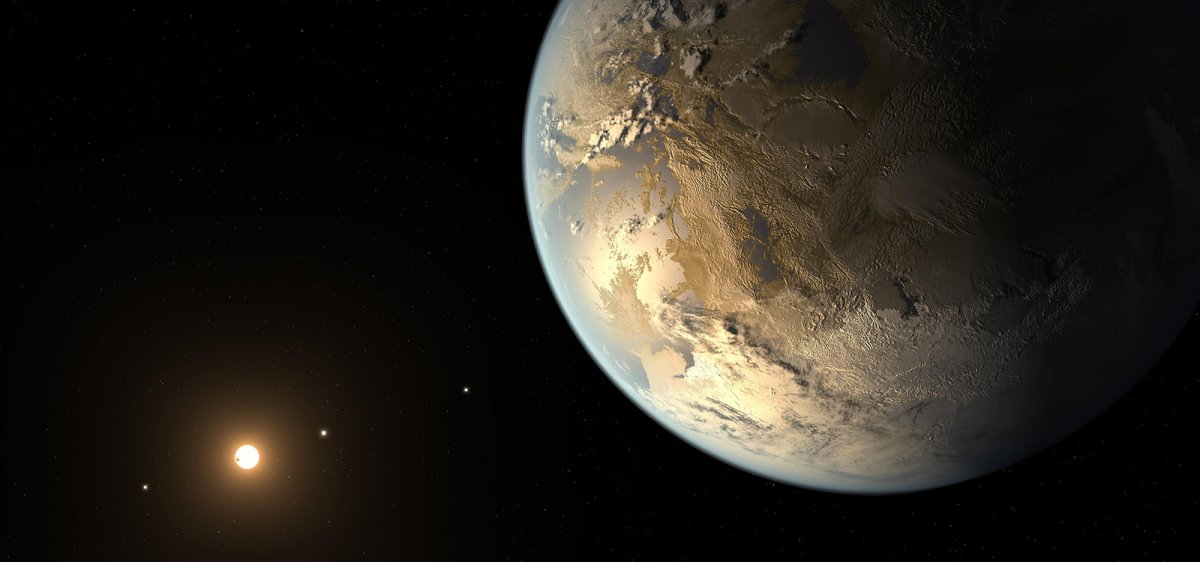
Our solar system is just a small part of the Milkway Galaxy. Astrobiologists estimate there could be nearly 500 habitable planets in our galaxy alone. Given that there are billions of galaxies in the universe, the mathematical probability of life existing elsewhere is high. However, because these systems are many light-years away, confirming the existence of "alien" life remains a challenge for the future.
What Makes a Planet Habitable?
Scientists have identified five core characteristics that a planet must possess to support life:
1. Temperature
Temperature is the primary filter for life. If a planet is too hot, everything remains in a gaseous state; if too cold, everything freezes. A planet must be in the "Goldilocks Zone"—not too hot, not too cold—allowing water to remain in liquid form.
2. Liquid Water
Water is the universal solvent for life. While a planet doesn't need seven oceans like Earth, some form of liquid water is essential for the chemical processes that sustain living cells.
3. Energy Source
Life requires fuel. This usually comes from two sources:
Light Energy: Sunlight for photosynthesis (essential for plants).
Chemical Energy: Redox reactions (essential for many microbes).
4. Absence of Harmful Radiation
A planet might have water and the right temperature, but if it is bombarded by high levels of radiation or toxic chemicals, life cannot survive. Earth's atmosphere acts as a shield, with the Ozone Layer filtering out deadly ultraviolet (UV) rays.
5. Essential Elements (Nitrogen and Oxygen)
Nitrogen is vital for building proteins and DNA. While oxygen is necessary for complex animal life today, primitive life on Earth actually started without it. Therefore, scientists look for nitrogen as a primary indicator of biological potential.
Potential "Earth 2.0" Candidates
Astronomers have already discovered several planets that might support life. Though they are light-years away, they show great promise:
| Planet Name | Distance from Earth | Key Characteristic |
| Proxima b | 4.2 Light-years | Closest exoplanet; potential for liquid water. |
| Wolf 1061c | 13.8 Light-years | Located in the habitable zone of a red dwarf star. |
| Gliese 832c | 16 Light-years | Frequently cited as one of the most Earth-like planets. |
| TRAPPIST-1d | 40 Light-years | Part of a system with seven Earth-sized planets. |